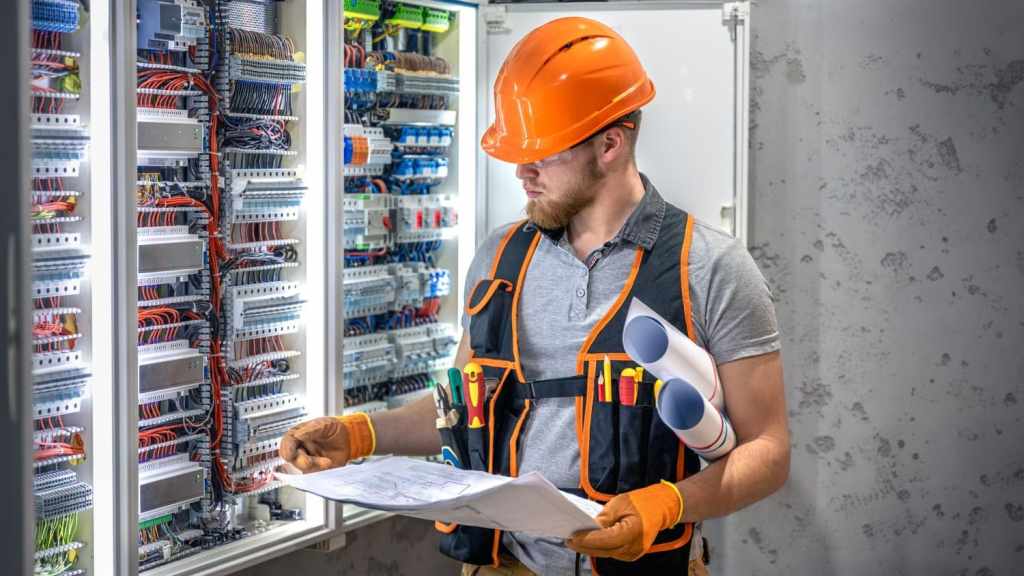
Electricians don’t all work in homes or office buildings — some specialize in powering the machines that keep industries running. These professionals are known as industrial electricians, and they’re among the most highly trained and well-paid in the electrical field.
If you enjoy problem-solving, working with complex systems, and being part of large-scale operations, this path may be for you.
⚙️ What Does an Industrial Electrician Do?
Industrial electricians install, maintain, and repair electrical systems used in factories, manufacturing plants, energy facilities, and production sites.
Their work goes beyond standard wiring. They handle:
- Heavy machinery and conveyor systems
- Motor controls and programmable logic controllers (PLCs)
- High-voltage systems and transformers
- Industrial automation and robotics
- Preventive maintenance and system troubleshooting
Because of the technical depth and safety demands, industrial electricians often receive advanced training and higher pay than residential or commercial electricians.
🎓 How to Become an Industrial Electrician
The career path starts similarly to other electricians:
- Earn a high school diploma or GED
- Complete a trade school program (optional but helpful for industrial systems)
- Enter an apprenticeship, ideally with exposure to manufacturing or industrial environments
- Earn your journeyman license through your state exam
Many industrial electricians also pursue specialized training in automation, control systems, or robotics.
👉 To understand the complete timeline and training, see our guide on how long it takes to become an electrician.
💰 Industrial Electrician Salary in the U.S.
Industrial electricians typically earn $65,000 to $90,000 per year, depending on experience, certifications, and region.
According to the U.S. Bureau of Labor Statistics, the average hourly wage is around $34–$36, higher than the national average for electricians overall.
| Experience Level | Typical Pay | Notes |
|---|---|---|
| Entry-level apprentice | $40,000–$50,000 | Training period, supervised work |
| Journeyman | $65,000–$80,000 | Independent industrial maintenance |
| Master/Lead Technician | $85,000–$100,000+ | Supervisory or automation expertise |
👉 Want a broader look at pay across the field? Read our guide on how much electricians make in the U.S.
🧰 Skills and Traits Needed
Successful industrial electricians combine hands-on ability with technical thinking. Common requirements include:
- Strong understanding of schematics and control diagrams
- Ability to troubleshoot complex systems
- Knowledge of the National Electrical Code (NEC) and OSHA standards
- Mechanical aptitude and precision
- Comfort working in factories or production settings
It’s a role that rewards both technical skill and reliability — downtime in an industrial facility can cost thousands per hour, so expertise is highly valued.
🚀 Career Outlook
Demand for industrial electricians remains strong as U.S. manufacturing modernizes. Growth in automation, renewable energy, and electric vehicle production continues to expand opportunities.
Electricians with PLC or robotics experience are especially sought after, and many eventually move into maintenance leadership or plant engineering roles.
Final Thoughts
Industrial electricians play a crucial role in keeping America’s industries running safely and efficiently. It’s a career that combines high earning potential with hands-on problem-solving in cutting-edge environments.
If you’re mechanically minded and enjoy working with technology and power systems, becoming an industrial electrician could be the perfect fit.