Coming back from a knee injury can feel frustrating — especially if you’re eager to move your body again but worried about making things worse. Whether it was a torn ligament, sprain, or overuse injury, restarting your fitness journey safely is not only possible, it’s essential for full recovery.
This guide walks you through the smart, progressive steps to start working out again after a knee injury, so you can rebuild strength, restore mobility, and move forward with confidence.
Wait — Have You Been Cleared to Exercise?
Before jumping into a new routine, make sure you’ve been medically cleared to resume physical activity.
Even if the pain is gone, lingering instability or inflammation can lead to re-injury. It’s best to get the green light from:
- A doctor
- A physical therapist
- Or another licensed healthcare provider
Red flags that mean you’re not ready:
- Ongoing swelling or fluid around the knee
- Pain with basic movements like walking or climbing stairs
- A sense of instability or “giving out”
If you’re unsure, get checked first — it’s worth it.
Start with Low-Impact Movement
The first step back into fitness should be gentle, low-impact exercises that get your joints moving without stressing them.
✅ Great options include:
- Walking on flat surfaces (start with 5–10 minutes and build up)
- Stationary cycling (low resistance, short sessions)
- Swimming or water aerobics (buoyancy reduces joint load)
- Elliptical machines (low resistance and stable pacing)
These activities improve circulation, loosen stiff tissues, and help rebuild your cardio base — all without high pressure on the knee joint.
Rebuild Mobility and Range of Motion
Before pushing into strength work, make sure your knee can move freely and comfortably through its full range of motion.
Focus on:
- Gentle stretching (hamstrings, quads, calves)
- Knee extensions (sitting on a chair, lifting and holding your leg)
- Heel slides (lying down, slowly sliding your heel toward your hips)
- Foam rolling tight surrounding areas (quads, IT band, calves — avoid directly rolling a painful joint)
If mobility feels limited, stay in this phase longer and consider checking in with a physical therapist.
Reintroduce Strength Training Gradually
Once your mobility returns and low-impact movement feels good, you can begin rebuilding strength — slowly and intentionally.
Start with:
- Bodyweight squats to a chair
- Glute bridges
- Mini step-ups (on a low step or curb)
- Side-lying leg raises
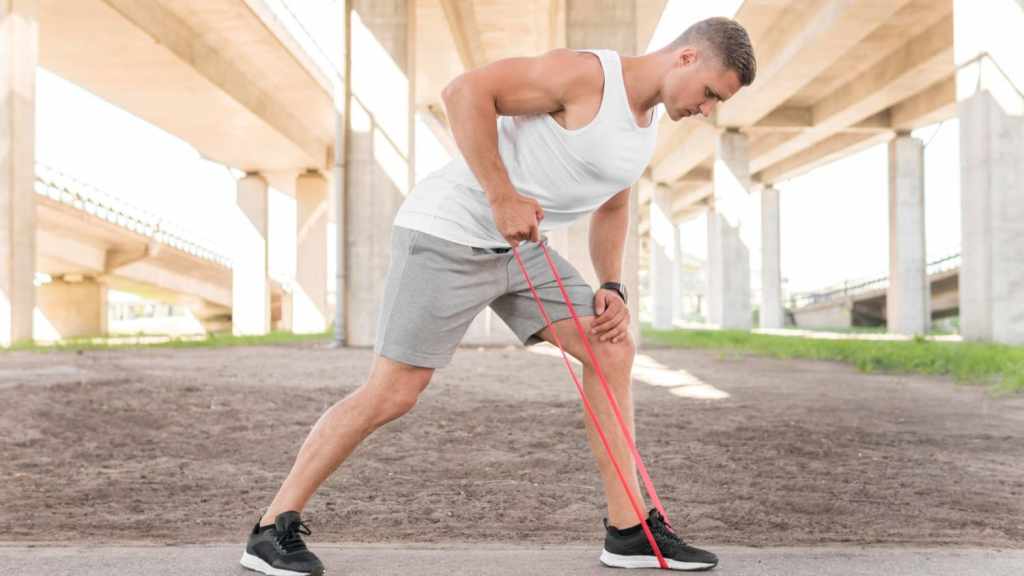
- Resistance bands (for controlled leg curls or extensions)
Avoid:
- Deep squats or lunges
- Plyometric moves (jumping, bounding)
- High weights until you’ve built a base
Focus on control, not intensity. Quality of movement matters more than reps.
Cardio Options That Are Knee-Friendly
Cardio can return early — as long as it’s low-impact and your knee feels stable.
Safe cardio options:
- Swimming
- Cycling
- Rowing (with caution — check your knee’s bend tolerance)
- Incline walking or walking intervals
Skip running or HIIT until you’re fully confident in your knee stability and strength.
Listen to Your Knee — And Don’t Rush
The biggest mistake people make after an injury? Pushing too hard, too fast.
Use the “No Pain, Yes Fatigue” Rule:
- You should feel tired muscles — not sharp pain
- Swelling or soreness that lingers for more than 24 hours means you overdid it
Track your progress:
- Keep a workout log
- Note any pain, discomfort, or stiffness
- Adjust accordingly
Recovery isn’t linear. Respect setbacks and allow space for healing.
When to See a Professional Again
Even if you’ve started working out, get help if you notice:
- Recurring pain or swelling
- Instability when walking, stepping, or bending
- Trouble with daily activities
- Difficulty progressing despite consistent effort
A physical therapist can identify imbalances, prescribe corrective exercises, and fast-track your return to full strength.
In the U.S., many insurance plans cover physical therapy for post-injury rehab — check your coverage or ask your primary care doctor for a referral.
Final Thoughts: Recovery Is Progress Too
Getting back into workouts after a knee injury takes patience, consistency, and a focus on safety — but you’ll get there.
- Start small
- Prioritize form
- Give your body time to adapt
It’s not about jumping back into your old routine — it’s about creating a new foundation that’s even stronger than before.